.png)
.png)
CT Trim Carpentry 101: Wainscoting, Beadboard & Paneling
What “Trim Carpentry” Really Means (and Why It Changes a Home Fast)
Trim carpentry is the difference between a room that looks “fine” and a room that looks finished. Wainscoting, beadboard, and wall paneling add shadow, proportion, texture, and protection. In Connecticut homes (especially Colonials, Capes, and older farmhouses), these details often look like they belonged there from day one.
Done well, trim:
- makes ceilings feel taller (yes, really)
- makes a room feel more expensive without a remodel
- protects walls from scuffs (mudrooms, hallways, staircases)
- adds architectural character that photographs beautifully
Done poorly, trim can look random, mis-scaled, or “stuck on.” This is why proportion and installation details matter.
Want a trim plan that fits your home’s style and is installed cleanly?
Start here: Request a Free Quote
See work: Gallery · Explore: Services
Part 1: The Main Types of Wall Trim (CT Homeowner Guide)
.png)
1) Wainscoting (The Classic CT Upgrade)
Wainscoting traditionally means paneling on the lower part of a wall, capped with a chair rail. In CT, it’s common in:
- dining rooms
- entryways/halls
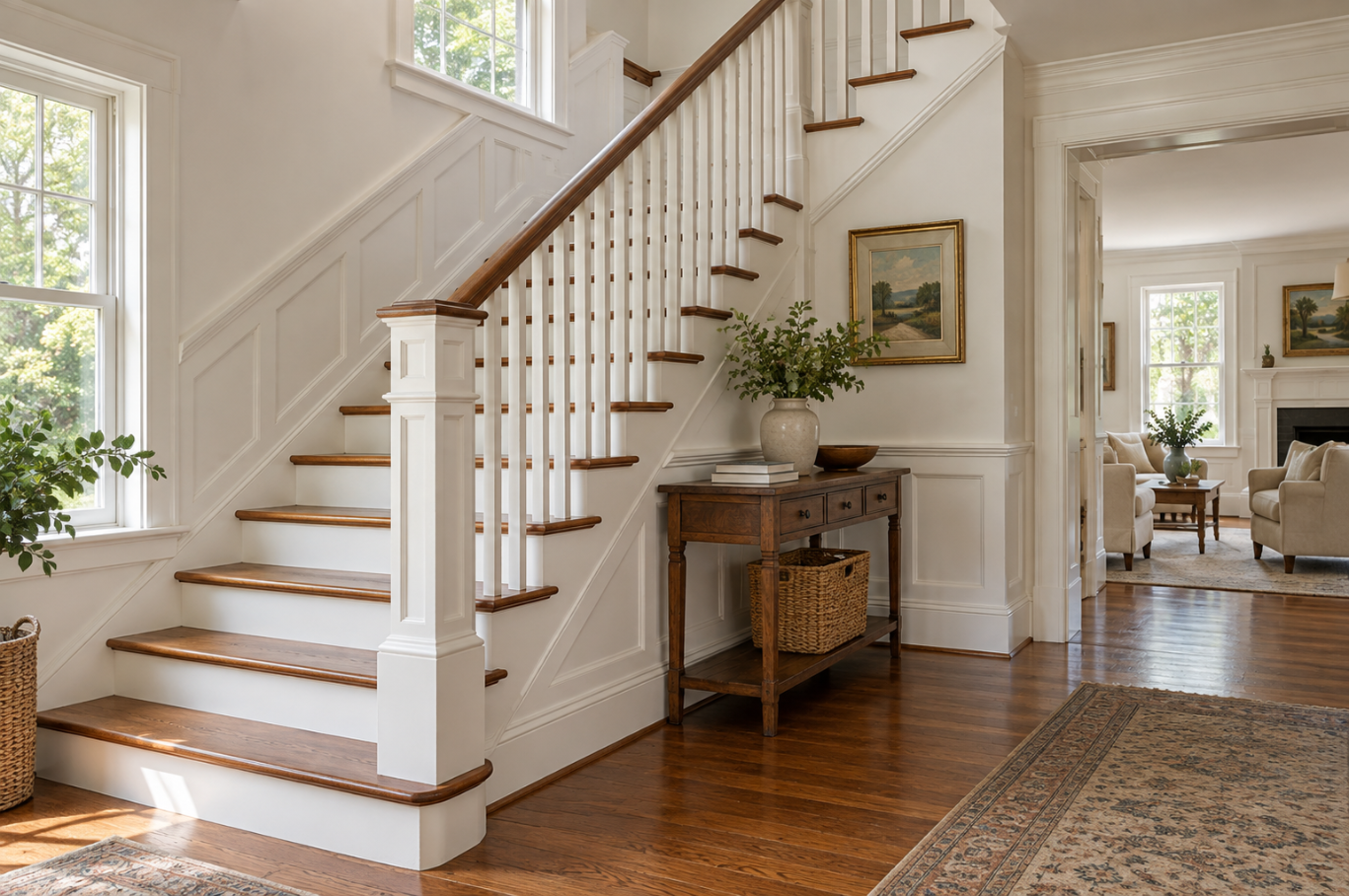
- staircases
- powder rooms
- living rooms (for added character)
Common wainscoting styles:
Raised Panel Wainscoting
- more formal, great for traditional Colonials
- Looks high-end when paired with crown/casing
Flat Panel Wainscoting (Shaker-style)
- clean and timeless
- works in transitional and modern traditional homes
Board-and-Batten (vertical battens)
- can be traditional or modern farmhouse, depending on proportions
- Works great for bedrooms and hallways
Applied “Picture Frame” Panel Molding
- A budget-friendly way to get the paneled look
- very popular in CT for dining rooms and stair walls
2) Beadboard (Best for Mudrooms, Baths, and Nooks)
Beadboard has vertical grooves (“beads”) that add texture and casual charm. In Connecticut, beadboard is perfect for:
- mudrooms and garage entries
- bathrooms and laundry rooms
- breakfast nooks
- coastal-style rooms and porches
Where beadboard performs best:
- behind hooks (coat scuffs, backpack scrapes)
- around vanities (if moisture is protected properly)
- in high-traffic areas where drywall gets destroyed
Pro note: Beadboard is a great “function first” trim choice because it hides wear and wipes clean easily when painted in durable enamel.
3) Wall Paneling (The “Room Maker”)
This includes full-height paneling, feature walls, and accent treatments such as:
- board-and-batten to the ceiling
- full-wall applied molding grids
- modern slat walls (often wood-stained)
- shiplap or v-groove paneling
Paneling works when you want a room to feel more designed without changing furniture.
Part 2: The Most Important Decision, Height
If the trim height is wrong, the room will feel off. If the height is right, even a simple profile looks expensive.
The CT Height Guide (Practical Rules):
30–36 inches (lower wainscot)
- classic chair rail height
- great for hallways and smaller rooms
- safer choice in 8-foot rooms
36–42 inches (most popular)
- strong visual impact without overpowering
- works in dining rooms and entries
- Looks great with standard furniture heights
48–54 inches (statement height)
- very popular for modern wainscoting looks
- can make ceilings feel taller if designed correctly
- works best when the room has good ceiling height and breathing room
⅓ wall height rule (classic)
Traditional proportion: wainscot is about one-third of the wall height.
Half-wall height (modern trend):
Half-height wainscoting can work beautifully, but it must be planned around:
- window sills
- outlet locations
- furniture and artwork placement
Pro move: We often align the wainscot cap with nearby architectural lines, window stools, stair rail heights, or built-in tops to make it look intentional.
Part 3: Room-by-Room Recommendations (Connecticut Edition)
Entryway + Hallways
Best choices:
- applied panel molding (picture frame boxes)
- beadboard for high-traffic practicality
- flat panel wainscot for a clean upgrade
Why it works: Halls get scuffed. Trim protects walls and makes the entry feel finished.
Dining Rooms
Best choices:
- raised panel or flat panel wainscot
- chair rail with picture frame molding above (classic CT look)
- optional wallpaper above wainscot for major impact
Dining rooms photograph incredibly well with wainscoting.
Staircases
Best choices:
- Applied molding boxes along the stair run
- board-and-batten for a clean, vertical feel
- half-wall paneling that tracks the slope (advanced but stunning)
Stair wainscoting is one of the most “this house is high-end” signals in CT interiors.
Mudrooms
Best choices:
- beadboard wainscoting with heavy-duty hooks
- v-groove paneling for durability
- waterproof paint + sealed baseboard details
We often pair beadboard with mudroom built-ins; ask about it under Services.
Bathrooms
Best choices:
- beadboard wainscot
- tile base + panel above
- moisture-resistant materials and correct caulk lines
Bathrooms need moisture-smart detail work; the wrong materials can swell.
Bedrooms
Best choices:
- board-and-batten feature wall
- chair rail + picture frame molding for classic charm
- half-wall wainscoting behind a bed wall
Bedrooms benefit from paneling because it adds texture without clutter.
Part 4: Profiles, Trim Pieces, and What Makes It Look “Custom”
A lot of DIY trim looks DIY because of two issues:
- proportions are random
- Reveals and alignment are sloppy
The pieces that matter:
- Baseboard: anchors the wall
- Chair rail / cap rail: finishes the top edge
- Stiles and rails / battens: create the pattern
- Backband/casing alignment: makes door and wall trim feel cohesive
Pro detail: We keep consistent reveals and align trim lines across doors, windows, and stairs so everything “reads” as one system.
Part 5: Materials That Hold Up in CT Homes
For painted trim:
- MDF can be stable for interior panel faces
- Poplar or pine is often used for trim components.
- Moisture-resistant boards were needed (mudrooms/baths)
For stained trim:
- white oak is a favorite (durable and timeless)
- walnut for richer feature walls
Durability tip: In mudrooms and hallways, we use durable enamel finishes and plan base details to withstand mops, boots, and scuffs.
Part 6: Installation Details That Separate Pro Work From DIY
1) Layout first
We plan the pattern so:
- boxes are evenly spaced
- corners aren’t awkward
- outlets land inside panels neatly
- Symmetry holds across the wall
2) Scribing and coping
CT homes often have slightly out-of-square walls. We scribe and cope so gaps don’t show.
3) Caulk and finish
Clean trim looks clean because:
- seams are tight
- caulk is minimal and smooth
- paint lines are crisp
4) Match the home’s style
We match existing casing/base language so the trim doesn’t look “new and random.”
Want to see the difference quality makes?➡️ Gallery
Part 7: Cost Expectations (What Drives Price)
Pricing depends on:
- linear feet
- style complexity (raised panel vs applied molding)
- number of corners/returns
- ceiling height and wall condition
- paint vs stain finish
- stair walls (more complex layouts)
If you want a quick estimate, send photos and wall dimensions through:➡️ Contact
Common Mistakes to Avoid
- choosing a height that fits window sills or furniture
- uneven box spacing
- trim that doesn’t match the home’s casing/base language
- cheap materials in wet zones
- overusing too many styles in one home (keep a consistent trim “language”)
FAQs
Is wainscoting outdated?No. It’s one of the most timeless upgrades, especially in Connecticut homes.
Beadboard or board-and-batten, what’s easier to keep clean?Beadboard painted with enamel is extremely wipeable.
Can you do one wall only (as a feature wall)?Yes, board-and-batten or panel-molding features on walls are great high-impact projects.
How long does installation take?A single room can be 1–3 days, depending on complexity and finishing.
Ready to Upgrade Your Walls the Right Way?
Wainscoting, beadboard, and paneling are among the fastest ways to make your home feel custom without a full renovation. If you want a design that fits your home’s style and clean carpentry that looks built-in:
Call us today to get a free quote.Carpentry & Handyman ConceptsStart here: ContactExplore: ServicesSee results: GalleryLearn more: About
Start Planning Your Project With A Free Quote!
Book Your Free EstimateRead our latest blog
Flexible Financing With Klarna
We’ve partnered with Klarna to make your next project stress-free. Split your payments into easy installments, enjoy transparent pricing, and get the home upgrades you need now, without waiting.
.png)
Customer Reviews
"Thank you so much, I am very pleased with your work. All of the doors look great. I appreciate your suggestion to do all of the doors, including the inside doors. Much more elegant. You have a great team."

-Susan K.
"Dave was very easy to work with and his prices were reasonable. He would come by to check on his crew and the job. I would definitely recommend Carpentry and Handyman Concepts."

-Kathy L.
"David, and his team are highly skilled pro’s and very knowledgeable about the business, they do an excellent job! I highly recommend them if you are in need of Carpentry And Handyman services."

-Blaine B.
"I would highly recommend Dave from Carpentry and Handyman Concepts. They were efficient, professional, and very knowledgeable. I will definitely have them back at my house for my next project."

-Ashley R.
"Dave and his guys did a great job on a couple of jobs I needed done. So great that I’ve already referred them to someone else! I will definitely be using them again."

-Pam F.
"I would hire David Grecco again in a heartbeat. They were professional, experienced, and good people. I will definitely use him again! Thank you, Linda"

-John O.

Our Location & Business Information
Proudly serving Fairfield County, CT, including Norwalk, Westport, New Canaan, Darien, and Wilton. We deliver licensed, insured, and reliable carpentry, remodeling, and handyman services.