
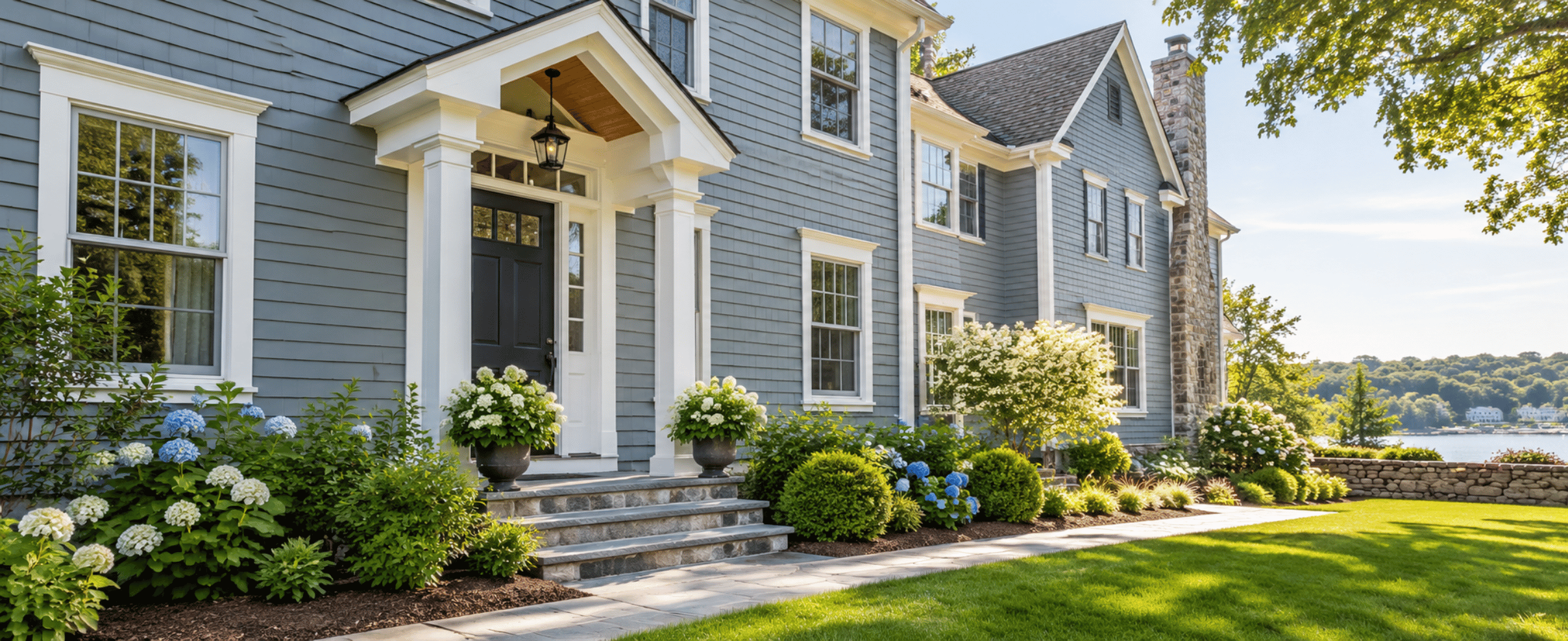
Exterior Siding Repair vs Replacement for Connecticut Homes
Every spring we get the same call. A homeowner in Westport or Darien walks the perimeter of the house after the snow melts, pokes at a clapboard near the bottom of a wall, and their finger goes straight through it. The question is always the same: is this a repair, or do I need new siding? Exterior siding repair vs replacement in Connecticut is a real decision with real money behind it, and it deserves a straight answer rather than a sales pitch.
This guide is for homeowners with wood siding in Norwalk, Westport, New Canaan, Darien, Wilton, Stamford, Fairfield and the surrounding Fairfield County towns. It covers how cedar clapboard and shingle siding fail in a coastal climate, how to inspect your own walls, the decision framework we use, typical costs, what a proper repair and replacement look like, and the lead paint rules that apply to most of the older housing stock here.
What Kind of Siding You Actually Have
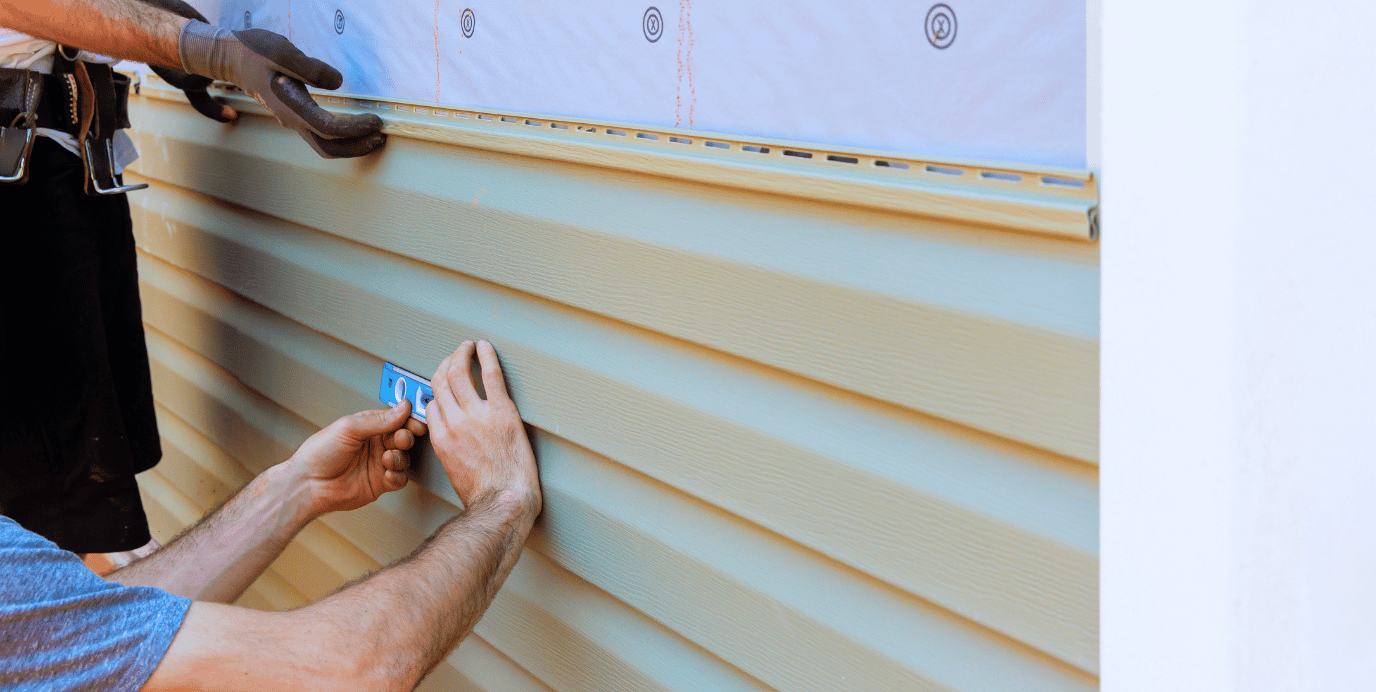
Bevel Siding (Clapboard)
Horizontal boards, thicker at the bottom edge than the top, with each course overlapping the one below. The traditional material is eastern white cedar or white pine, with western red cedar common on later houses. It is the default look of Colonial homes across this part of Connecticut.
Cedar Shingle Sidewall
Tapered shingles laid in courses, either single course or double course with an undercourse for a deep shadow line. They are the signature of Shingle Style houses along the shoreline, often left to weather to silver-grey. Shiplap and board and batten show up mostly on garages, additions and mid-century houses.
Also identify what is behind the siding. On a house built before roughly 1950, you may find board sheathing with no building paper at all, or siding nailed directly to the studs. Later houses usually have plywood or OSB with felt or a housewrap. What is there determines how much resilience the wall has when water gets past the siding, and it drives the repair-versus-replace decision.
How Coastal Connecticut Weather Attacks Wood Siding
Cedar heartwood contains natural extractives that resist decay, which is why it has been the New England siding material for centuries. But sapwood has none of that protection, and natural durability is not waterproofing. Cedar resists decay when it can dry. Cedar that stays wet rots like anything else.
These are the failure mechanisms we see most often on Fairfield County walls:
We will not quote an exact lifespan for a finish on cedar. It depends on the coating, the prep, the exposure and whether the wall can dry.
How to Inspect Your Own Siding
You can do a useful inspection in an hour with a screwdriver and a notepad. Pick a dry day and work in this order:
Our spring maintenance guide pairs well with this walk-around.
Ready to talk it through? This call is hard to make from photographs, so we will probe the walls with you. Schedule a free 30-minute estimate with Dave, call or text (203) 847-5391, email dave@carpentryandhandymanconceptsllc.com, or send a message through the contact page.
Exterior Siding Repair vs Replacement: The Decision Framework
Here is how we weigh siding repair vs replacement once the walls have been probed and mapped.
The Middle Path Nobody Talks About
You do not have to do all four walls at once. South and west walls take far more weather and often fail years earlier, so replacing one elevation now and the sheltered walls later spreads the cost. The related option is replacing just the bottom two or three courses around the whole house, where ground-contact rot concentrates. When the upper walls are sound, this is legitimate work at a fraction of full replacement.
Siding Repair vs Replacement Costs in Fairfield County
Estimates vary with material, access, paint condition and what we find behind the boards, so treat these as planning ranges. A small clapboard or shingle repair covering a handful of boards below one window, including flashing and priming, typically runs a few hundred dollars to around $1,500 once the elevation is blended with paint. Replacing the bottom courses around an entire house typically runs in the low to mid thousands. Full cedar re-siding with new housewrap, flashing, a rainscreen and finish is a five-figure project on most Fairfield County homes, and staging, sheathing repair and lead containment on a pre-1978 house move that number meaningfully.
Any honest contractor will price sheathing replacement as a per-sheet allowance rather than pretending to know what is behind the wall. Klarna financing is available for larger exterior jobs.
Lead Paint Rules for Pre-1978 Siding Work
Exterior siding work on an older home is the most likely place a homeowner in Norwalk, Westport, New Canaan or Wilton will run into lead paint requirements. Lead paint was not banned until 1978, and much of the housing stock here predates that. Scraping, sanding and removing painted boards are exactly the activities that generate lead dust.
The applicable federal rule is the EPA Renovation, Repair and Painting (RRP) Rule. Stated plainly:
Intact paint is not an active hazard; disturbed paint is. Exterior work on a pre-1978 home should be done by a certified firm, which is why we maintain EPA Lead-Safe certification. If a contractor bidding on your 1928 house does not bring this up, that tells you something. Confirm current rules with your building department.
What a Proper Repair and a Proper Replacement Look Like
"Repair" covers a wide range of quality. Here is what correct looks like for a damaged clapboard:
Epoxy consolidants have a real place on irreplaceable trim, but on field siding a replacement board is usually faster, cheaper and longer lasting. This is the kind of exterior work our general carpentry service handles every week, and our guide to exterior woodwork covers the trim side.
Line Items a Full Replacement Should Include
If the decision lands on replacement, compare these items across bids, because this is where cheap bids cut:
Fiber cement and engineered wood are legitimate alternatives with tradeoffs in appearance and repairability. On a Shingle Style house near the water or a Colonial in New Canaan, changing the material changes the house, and that should be a deliberate choice. You can see examples in our before and after gallery.
Maintenance That Extends Siding Life
Whether you repair or replace, the same habits keep wood siding out of trouble:
For the storm side of exterior protection, our post on weatherproofing doors, seals and siding covers storm season.
DIY or Hire a Pro?
The siding repair vs replacement question in Connecticut also has a DIY layer. A capable homeowner can pull back mulch, clean gutters, and even swap a single clapboard on a post-1978 house at ground level. Once the job involves a pre-1978 painted surface beyond 20 square feet, a ladder above the first story, a roof-wall intersection, opening the wall to inspect sheathing, or matching an original profile, it is a job for a licensed carpenter. Small scattered fixes fit under our handyman services, while full elevations and re-siding tied to other exterior changes run through our home remodeling team.
Frequently Asked Questions
How do I know if my siding damage is just cosmetic?
Probe it. Press a screwdriver firmly into the wood at bottom edges, butt joints, corners and under windows. Faded finish, chalking and light mildew do not soften wood. If the tool sinks in, the board has lost structure and needs to come out.
Can I replace just the bottom courses instead of the whole wall?
Often, yes. Ground-contact rot concentrates in the bottom two or three courses. If the upper walls probe sound and the sheathing is intact, replacing the lower courses is legitimate work at a fraction of full replacement cost, as long as you also restore clearance and correct grading.
Why does my paint keep peeling on only one wall?
Almost always because that wall is getting wet from behind, not because the paint was bad. Moisture pushed out through the boards lifts the film. Common sources are an overflowing gutter, a missing kickout flashing, or a failed window flashing. Repainting without finding the source means repainting again.
What fasteners should be used on cedar siding near the shoreline?
Stainless steel. Cedar's acidic extractives corrode ordinary steel, which then rusts, streaks the siding and loses grip. Type 316 stainless is specified within 15 miles of salt water, which covers nearly all of coastal Fairfield County. Copper nails react with cedar and should never be used.
Is a rainscreen worth the extra cost on a Connecticut house?
For wood siding in coastal New England, yes. A furred cavity behind the siding lets water drain out and lets the back of the boards dry. It is only practical when the siding is already off, which is why it belongs in the replacement conversation.
Work With Carpentry & Handyman Concepts
Carpentry & Handyman Concepts LLC is owned and operated by Dave Grecco, who has spent more than 30 years working on Fairfield County homes. We are licensed and insured in Connecticut (CT License #0608293), EPA Lead-Safe Certified, and 5-star rated on Google. Whether it is a few boards in Wilton or a full elevation in Westport, we give you options at more than one price point. Klarna financing helps spread the cost of larger projects, and our monthly home care packages keep the seasonal walk-around on the calendar. Read more about Dave, browse our carpentry and remodeling services, or check our frequently asked questions.
Ready to talk it through? Schedule a free 30-minute estimate with Dave, call or text (203) 847-5391, email dave@carpentryandhandymanconceptsllc.com, or send a message through the contact page.
Building codes, permit requirements and zoning rules vary by town and change over time. This article is general guidance for Fairfield County homeowners and is not a substitute for direction from your local building department.
Start Planning Your Project With A Free Quote!
Book Your Free EstimateRead our latest blog

Flexible Financing With Klarna
We’ve partnered with Klarna to make your next project stress-free. Split your payments into easy installments, enjoy transparent pricing, and get the home upgrades you need now, without waiting.

Customer Reviews
"Thank you so much, I am very pleased with your work. All of the doors look great. I appreciate your suggestion to do all of the doors, including the inside doors. Much more elegant. You have a great team."

-Susan K.
"Dave was very easy to work with and his prices were reasonable. He would come by to check on his crew and the job. I would definitely recommend Carpentry and Handyman Concepts."

-Kathy L.
"David, and his team are highly skilled pro’s and very knowledgeable about the business, they do an excellent job! I highly recommend them if you are in need of Carpentry And Handyman services."

-Blaine B.
"I would highly recommend Dave from Carpentry and Handyman Concepts. They were efficient, professional, and very knowledgeable. I will definitely have them back at my house for my next project."

-Ashley R.
"Dave and his guys did a great job on a couple of jobs I needed done. So great that I’ve already referred them to someone else! I will definitely be using them again."

-Pam F.
"I would hire David Grecco again in a heartbeat. They were professional, experienced, and good people. I will definitely use him again! Thank you, Linda"

-John O.

Our Location & Business Information
Proudly serving Fairfield County, CT, including Norwalk, Westport, New Canaan, Darien, and Wilton. We deliver licensed, insured, and reliable carpentry, remodeling, and handyman services.