
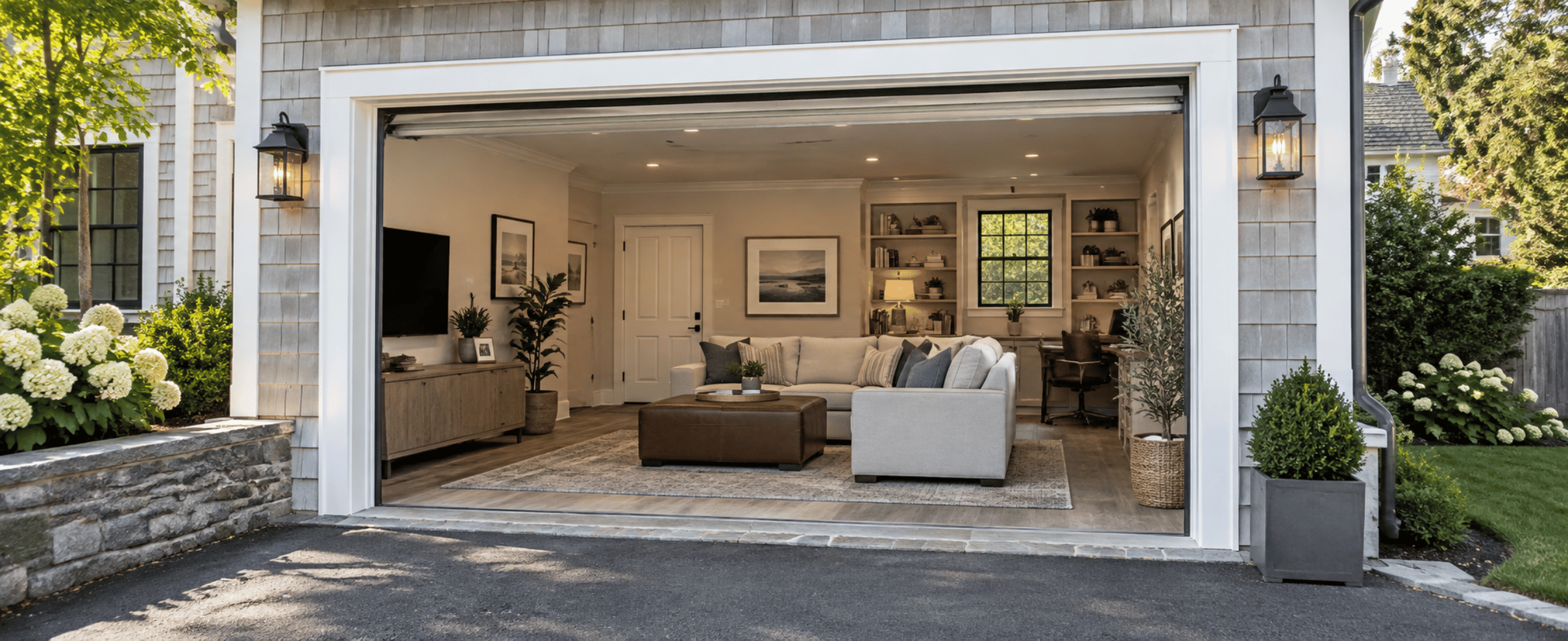
Garage Storage Shelving to Install Before Winter
The first real snowfall in Fairfield County has a way of exposing the garage. One morning the car needs to come inside, the snow blower needs to come out, and the shovels, ice melt, boots and holiday bins are all sitting in exactly the wrong place. If your garage has turned into a storage unit with a door on it, mid-November is the right moment to fix that. Good garage storage shelving, wall systems and overhead racks can give you back a parking space before the first storm, keep winter gear where you can grab it in the dark, and get the decorations off the floor and out of the way until December. This guide explains the options, what works in Connecticut garages, and how a carpenter can install it in a day or two.
We install storage in garages across Norwalk, Westport, Wilton, Darien, New Canaan, Stamford, Fairfield, Ridgefield, Greenwich and the rest of Fairfield County, and the story is almost always the same. Nobody planned for the garage to fill up. It happened one bike, one bag of mulch and one box of hand-me-downs at a time. The fix is not more bins. It is getting everything up off the floor and onto walls and ceilings that are built to carry it.
Why Garage Storage Shelving Belongs on the Pre-Winter List
Summer is when most people think about the garage, but winter is when a disorganized one actually costs you. Here is what changes once the weather turns:
- The car needs the space. Scraping ice off a windshield at 6:30 in the morning gets old fast. A car parked inside starts warmer, stays clear of snow, and is protected from falling branches during storms.
- Winter gear needs a home near the door. Shovels, roof rakes, ice melt, boots and the snow blower all need to be reachable without moving three other things first.
- Floors get wet and salty. Snow melts off tires and boots, and road salt follows it in. Anything stored on the floor in cardboard boxes is going to wick up that water.
- Holiday bins move twice. Decorations come down in late November and go back up in January. If they live behind the lawn mower, that is two afternoons of shuffling.
- Daylight is short. Clocks fell back on November 1, so most of your garage trips now happen under one overhead bulb. Clear walls and labeled shelves matter more when you cannot see into the corners.
There is also a practical timing reason. Installing shelving and racks means drilling into framing, moving things around, and sometimes working with the garage door open. That is far more pleasant in November than in the middle of January.
Start With What Actually Lives in Your Garage
Before choosing any product or design, take an honest inventory. The best garage layouts come from sorting your stuff into groups based on how often you use it, not on what category it belongs to.
- Daily and weekly items. Trash and recycling bins, the dog leash, kids' bikes and scooters, sports bags, and in winter, shovels and ice melt. These belong at waist to shoulder height near the door you walk through most.
- Seasonal items. Lawn mower, garden tools, patio cushions, pool gear, the snow blower and roof rake. These need dedicated floor or wall zones that you can swap as the seasons change.
- Long-term storage. Holiday decorations, camping gear, keepsake boxes and luggage. These belong up high on shelving or overhead racks where they are out of the way most of the year.
- Things that should leave. Old paint, broken tools, outgrown toys and anything you have not touched in two years. Clearing these first makes every other decision easier.
If the "should leave" pile turns out to be large, our team also handles hauling. Our post on junk removal and dump runs in Connecticut explains what we take, and it is often worth clearing the garage before the storage goes in.
The Main Types of Garage Storage, Compared
Most well organized garages use a combination of three or four systems. Each one solves a different problem.
Freestanding and wall-mounted shelving
Shelving is the workhorse of garage storage. Freestanding metal units are fast and movable, but they can tip when loaded unevenly and they waste floor space underneath. Wall-mounted shelving is fastened into the studs, leaves the floor clear for sweeping and parking, and can be sized to fit the exact wall you have. For heavy bins, built wood shelving framed into the wall is extremely sturdy and can be designed around windows, outlets, and the garage door opener.
A good rule is to keep shelf depth matched to what you store. Deep shelves become black holes where small things disappear behind big things. Shallower shelves at eye level and deeper ones up high for bulky bins work well in most garages.
Slatwall and track systems
Slatwall panels and horizontal track rails mount to the wall and accept hooks, baskets, bins and brackets that slide or hang anywhere along the run. Their strength is flexibility. In summer the hooks hold rakes, hoses and bikes. In winter you move them around to hold shovels, the roof rake, boots and a bucket of ice melt by the door. Because nothing is fixed, the system grows and changes with your family.
Pegboard for tools
Pegboard is still a great option for hand tools above a workbench. It is inexpensive and makes it obvious when something has not been put back. It is less suited to heavy items, so pair it with sturdier storage elsewhere.
Overhead ceiling racks
The space above the garage door and above the hood of the car is usually empty. Ceiling-mounted racks turn it into storage for the things you use once or twice a year, which makes them ideal for holiday decorations, camping gear and luggage. They must be fastened into ceiling framing, sized to stay clear of the garage door, its tracks and the opener, and set at a height that still lets you open the hatch or trunk of your car.
Cabinets and workbenches
Closed cabinets keep dust off and hide clutter, and lockable cabinets are the right place for chemicals, fuel containers and sharp tools when children are around. A sturdy built workbench along one wall, with shelving above and below, gives you a place to fix things instead of just storing them.
Designing a Garage Layout That Works in Winter
Think of the garage as a set of zones rather than a single room. A typical two-car garage in our area might be laid out like this:
- Entry zone. Next to the door into the house. Hooks for coats and bags, a boot tray, a shelf for gloves and hats, and a bin for ice melt. This is the zone you will use most from December through March.
- Winter equipment zone. Near the overhead door. Wall hooks for shovels and the roof rake, and a clear floor spot for the snow blower so it can roll straight out.
- Garden and summer zone. Along a side or back wall. Rakes, hoses and the mower go here, tucked away for the season.
- Long-term zone. Upper shelves and overhead racks for holiday bins, camping gear and keepsakes.
- Work zone. A workbench with pegboard and task lighting, if you want one.
The goal is simple: you should be able to park, walk around the car without turning sideways, and reach anything you need in winter without moving something else first.
Safety and Building Details That Matter
Garage storage looks simple, but there are a few details that separate a system that lasts from one that sags or comes off the wall.
Fasten into framing, not drywall
Loaded shelves, bike hooks and ceiling racks put real weight on their fasteners. Drywall anchors are not designed for that. Every bracket and rail should be fastened into studs, ceiling joists or added blocking. Many garage walls in older Connecticut homes are unfinished or partially finished, which actually makes it easier to find and use the framing.
Keep doors and tracks clear
Overhead storage has to leave room for the garage door as it opens, the horizontal tracks, the springs and the opener. Shelving and hooks should never block the door between the garage and the house. That door is often required to be self-closing, and nothing should prop it open or get in the way of it latching. Our post on interior door replacement and barn doors touches on why the garage-to-house door is treated differently from other doors in the home.
Plan for moisture and salt
Garage floors get wet in winter. Keep storage off the floor where you can, use plastic bins instead of cardboard, and leave a gap between wood shelving and the slab so it is not sitting in meltwater. If you notice water coming in under the overhead door or along a wall, mention it at the estimate. A failed door seal or a grading problem is worth fixing before you invest in storage that will sit next to it.
Store chemicals responsibly
Keep fuel, paint, pesticides and pool chemicals in a closed or lockable cabinet away from heat sources, and follow the label directions for storage temperatures. Some products should not freeze, which is another reason to sort the garage before the cold settles in.
DIY Garage Storage vs Professional Installation
A handy homeowner can certainly assemble a freestanding shelf unit or screw a few hooks into a stud. Where professional installation pays off is with:
- Ceiling racks that need to be located on joists, leveled, and set clear of the garage door hardware
- Long runs of track or slatwall that need to be straight and level across uneven walls
- Built wood shelving and workbenches sized to fit around windows, outlets and pipes
- Garages with masonry walls, where fastening calls for the right anchors and drill
- Anything heavy that will be stored above head height
Our post on weekend projects versus professional jobs walks through the general logic. For garage storage, the short version is that if it is going over your head or over your car, it should be fastened by someone who does this every week.
How a Garage Storage Shelving Project Usually Goes
Most garage storage projects we do follow a simple sequence:
- Walkthrough and measurements. We look at the space, the framing, the door hardware, outlets and lighting, and talk through what you need to store.
- Layout plan. We sketch zones and recommend a mix of shelving, track, hooks and overhead racks that fits your garage and budget.
- Clear out. You or our team move items out of the work area. This is the moment to purge.
- Installation. Framing is located, blocking is added where needed, and everything is fastened, leveled and checked for clearance.
- Load and adjust. Items go back in by zone, and hooks or shelves get adjusted so everything fits the way you actually use it.
Many garages can be finished in a day or two, depending on how much built shelving is involved. If you also have smaller items on your list, like a sticking garage entry door, a loose handrail on garage steps or a damaged threshold, it makes sense to group them into the same visit. That is exactly what our handyman services are built for. If you want shelving custom built to the wall, our general carpentry services cover framed shelving, workbenches and built-in cabinets.
Thinking Bigger Than Storage?
Sometimes the inventory reveals that the garage is not really being used as a garage at all. If no car has parked in it for years and the family needs more living space, a conversion into a home office, gym or family room may be worth exploring. Our article on garage conversions in Fairfield County covers what that involves, and a well organized storage plan for the remaining space is often part of that project.
On the other hand, if what you really need is a separate home for the mower, bikes and garden gear so the garage can go back to holding cars, our blog post about custom sheds and outbuildings is a good next read for spring planning.
Frequently Asked Questions About Garage Storage Shelving
Is November too late to install garage storage?
No. November is a very good time. The weather is still mild enough to work with the garage door open, and finishing before the first storm means the car and winter gear have a place to go when snow arrives. Most garage storage work does not depend on exterior temperatures the way painting or deck work does.
Are overhead garage racks safe?
They are when they are installed correctly. Ceiling racks must be fastened into the ceiling framing, kept within the manufacturer's load rating, and positioned clear of the garage door, tracks, springs and opener. Store lighter, rarely used items up there, such as holiday decorations and camping gear, and keep heavy items lower.
What is better for a garage, shelving or slatwall?
Most garages benefit from both. Shelving is best for bins and boxes. Slatwall or track systems are best for tools, sports gear, shovels and anything with a handle, because hooks can be moved as seasons change. A carpenter can lay out the walls so each system goes where it works best.
Can you build shelving around my garage windows, outlets and pipes?
Yes. That is one of the main advantages of custom built shelving over store-bought units. We measure the wall and design shelving that works around windows, outlets, hose bibs and pipes so you are not stuck with gaps or blocked access.
Will garage storage help me park inside this winter?
That is usually the main goal. Getting bikes, bins, tools and seasonal gear off the floor and onto walls and ceilings frees up the floor space for a car. We plan the layout around the car's footprint and door swing so you can get in and out comfortably.
Get Your Garage Ready for Winter With Carpentry & Handyman Concepts
A garage that works in winter means a warm car in the morning, a shovel right where you left it, and holiday decorations you can find in five minutes instead of an hour. Carpentry & Handyman Concepts is a licensed and insured Connecticut contractor (CT License #0608293), EPA Lead-Safe Certified, and led by Dave Grecco with more than 30 years in the trade. Browse finished projects in our before and after gallery to see the quality of our carpentry.
Ready for garage storage shelving that gets your car back inside before the first storm? Book a free 30-minute estimate with Dave, call or text (203) 847-5391, email dave@carpentryandhandymanconceptsllc.com, or reach us through our contact page for Fairfield County homeowners. Send a few photos of the garage and we will come prepared with ideas.
Start Planning Your Project With A Free Quote!
Book Your Free EstimateRead our latest blog
Flexible Financing With Klarna
We’ve partnered with Klarna to make your next project stress-free. Split your payments into easy installments, enjoy transparent pricing, and get the home upgrades you need now, without waiting.

Customer Reviews
"Thank you so much, I am very pleased with your work. All of the doors look great. I appreciate your suggestion to do all of the doors, including the inside doors. Much more elegant. You have a great team."

-Susan K.
"Dave was very easy to work with and his prices were reasonable. He would come by to check on his crew and the job. I would definitely recommend Carpentry and Handyman Concepts."

-Kathy L.
"David, and his team are highly skilled pro’s and very knowledgeable about the business, they do an excellent job! I highly recommend them if you are in need of Carpentry And Handyman services."

-Blaine B.
"I would highly recommend Dave from Carpentry and Handyman Concepts. They were efficient, professional, and very knowledgeable. I will definitely have them back at my house for my next project."

-Ashley R.
"Dave and his guys did a great job on a couple of jobs I needed done. So great that I’ve already referred them to someone else! I will definitely be using them again."

-Pam F.
"I would hire David Grecco again in a heartbeat. They were professional, experienced, and good people. I will definitely use him again! Thank you, Linda"

-John O.

Our Location & Business Information
Proudly serving Fairfield County, CT, including Norwalk, Westport, New Canaan, Darien, and Wilton. We deliver licensed, insured, and reliable carpentry, remodeling, and handyman services.