
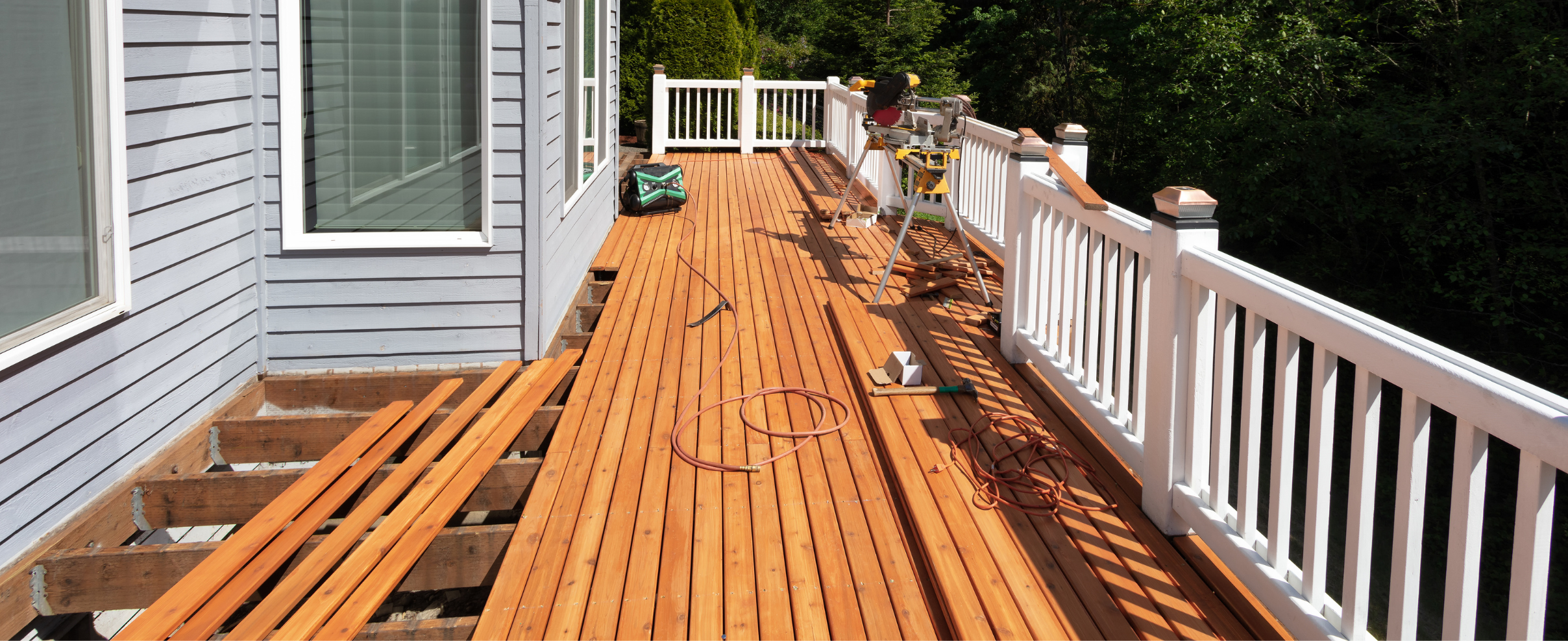
How to Winterize Your Deck in Fairfield County Before the First Snow
Your deck worked hard this year. It held summer dinners, birthday parties, late night conversations and the grill that never seemed to get covered. Now the furniture is stacked in the garage, the leaves are piling up in the corners, and the first snow in Fairfield County is closer than it feels. If you want to winterize your deck properly, early November is the time to do it. A few hours of cleaning, inspection and small repairs now can keep moisture, ice, salt and shovels from turning minor wear into real damage by spring.
This guide covers how to winterize a deck step by step, what to look for while you still have mild days, the snow and ice habits that protect the boards, and which repairs are worth booking before the weather closes the window on outdoor carpentry.
Why It Pays to Winterize Your Deck in Connecticut
Connecticut winters are hard on outdoor wood, and not only because of the cold. The real trouble comes from moisture combined with temperature swings. A typical winter here brings snow, rain, sleet and thaw days, sometimes all in the same week. Water gets into cracks, checks, fastener holes and joints, then freezes and expands. Over a season of freeze and thaw cycles, small openings grow larger, fasteners loosen, and wood that stays damp for long stretches becomes more vulnerable to rot.
Leaves and debris make it worse. A wet mat of oak leaves left on a deck all winter holds moisture against the boards, stains the surface and blocks the gaps that are supposed to let water drain. Add rock salt, metal shovels and heavy snow loads, and it is easy to see why so many decks look tired by April.
The goal of winterizing is simple. Keep the deck clean and dry, find weak spots before snow hides them, and fix what can be fixed while temperatures still allow it.
Step One: Clear Everything Off and Clean the Surface
Start with a bare deck. Move furniture, planters, rugs and grills, or at least slide them to a different spot. Items that sit in one place all winter trap water and leave discolored, damp patches underneath. Planters without feet are particularly hard on decking because they keep the boards beneath them wet for months.
Then clean thoroughly:
- Sweep and blow off leaves and pine needles, paying attention to corners, stair treads and the area against the house.
- Clear the gaps between boards. A putty knife or a thin tool will push out packed debris so water can drain through instead of pooling.
- Wash the surface with a deck cleaner suited to your decking material and a stiff brush. If you use a pressure washer, keep the pressure modest and the tip moving, because too much pressure can raise and damage wood fibers.
- Let it dry completely before applying any sealer or making a final inspection.
Composite and PVC decking need cleaning too. They will not rot like wood, but leaves, dirt and mildew can stain the surface, and the framing underneath is often still pressure treated lumber that needs the same attention as a wood deck.
Step Two: Inspect the Deck While You Can Still See It
Once snow covers the surface, problems disappear until spring. A clean deck on a dry November afternoon is the best chance you will get to look carefully. Work from the top down and from the house outward.
Decking boards
Walk every section and press on the boards with your foot. Look for boards that feel soft or spongy, cracks that run deep or along the length of a board, boards that have cupped or lifted, and fasteners that have backed out above the surface. Raised nail heads catch shovels and boots and let water into the wood around them.
Railings and balusters
Push firmly on the top rail and posts in several spots. A railing should feel solid. Wobbly posts, loose balusters and rails that flex are safety concerns, especially in winter, when people grab the railing for balance on icy steps.
Stairs
Deck stairs take the most abuse and are the most dangerous place to slip. Check for treads that rock, stringers that are cracked or soft at the bottom where they meet the ground, and handrails that move. Make sure the stairs land on a stable surface that will not heave.
Underneath the deck
If you can get under the deck safely, look at the joists, beams and posts. Dark, soft areas, fungus, and wood that crumbles when probed with a screwdriver are warning signs. Pay special attention to the ledger, the board that attaches the deck to the house. Water stains or rot along the ledger, or gaps where it meets the house, are serious and need a professional look. Our article on the nine warning signs your deck needs repair or replacement explains what each of these symptoms means.
Step Three: Make Small Repairs Before the Weather Turns
Many issues you find during an inspection are straightforward if you catch them in the fall. The key is timing. Wood repairs, fastening, sealing and finishing all go better on dry days with reasonable temperatures, and those days get scarce as November goes on.
Typical pre-winter deck repairs include:
- Resetting or replacing raised fasteners. Driving nails back down or replacing them with appropriate deck screws keeps boards tight and protects shovels and feet.
- Replacing damaged boards. Cracked, split or soft boards can usually be swapped individually, as long as the framing beneath them is sound.
- Re-securing railings and posts. Loose posts and rails can often be reinforced with proper hardware and blocking.
- Repairing stair treads and stringers. Loose or damaged treads are replaced, and stringers are checked and repaired or reinforced as needed.
- Addressing flashing and ledger concerns. Any sign of water getting behind the ledger should be evaluated before winter, because snow and ice will make the problem worse.
A soft board in November can become a hole by March, and a slightly loose railing can fail when someone leans on it to steady themselves on ice. Fixing them now is less expensive and much safer than discovering them after a winter of freeze and thaw.
Step Four: Seal or Protect the Surface If It Needs It
Wood decks benefit from a water repellent sealer or stain that suits the wood and the existing finish. A quick test tells you whether the surface needs attention. Sprinkle water on a few boards. If it beads up, the finish is still working. If it soaks in quickly and darkens the wood, the deck is absorbing moisture and would benefit from a fresh coat.
The catch is temperature. Most sealers and stains need dry weather and temperatures within the range listed on the product label, and they need time to cure. In Fairfield County, that window often closes in early or mid November. If the weather has already turned, it is usually better to clean the deck, make repairs, and plan to seal in spring than to apply a finish that cannot cure properly.
How to Treat Your Deck During a Fairfield County Winter
Winterizing does not end once the cleaning and repairs are done. How you handle snow and ice all season makes a big difference to how the deck looks in April.
Shoveling the right way
- Use a plastic shovel rather than a metal one, and push in the direction of the boards, not across them.
- Leave a thin layer of snow instead of scraping down to the wood. The goal is safe passage, not a bare surface.
- Keep the path to doors and stairs clear so snow does not pile against the house or block exits.
- Clear heavy accumulations after major storms, especially wet, heavy snow, so the load does not sit on the structure for weeks.
Salt and ice melt
Traditional rock salt can be hard on wood and on metal fasteners and connectors. If you need traction or ice melt on the deck or stairs, choose a product labeled as safe for wood or composite decking, or use sand for grip. Check your decking manufacturer's guidance if you have composite boards, since some products are not recommended for certain materials.
Keep drainage working
Gutters that overflow onto the deck create ice dams and constant moisture in one area. Make sure gutters and downspouts near the deck are clear and directing water away. If you have not already handled fall cleanup, our guide to fall cleanup services, leaf removal and gutter cleaning covers what we can take off your plate.
Do Not Forget the Front Porch and Entry Steps
Winterizing advice usually focuses on the backyard deck, but the front porch and entry steps see more winter traffic than any other outdoor surface. Mail carriers, delivery drivers and holiday guests all use them, often after dark now that sunset arrives before 4:30 in the afternoon. Check porch floorboards, step treads, risers and railings the same way you check the deck. Soft porch flooring or a loose handrail at the front door is a safety issue for everyone who visits. If your porch needs more than a few boards, our page on front porch repair and rebuild in Fairfield County walks through the options.
When to Call a Deck Professional
A handy homeowner can sweep, clean, test the finish, and reset a few nails. Call a professional when you find:
- Soft, rotted or crumbling wood in joists, beams, posts or the ledger
- Railings or posts that move noticeably when pushed
- Stairs that rock, sag or have damaged stringers
- A deck that feels bouncy or sways when people walk across it
- Water stains or rot on the house siding or sheathing where the deck attaches
- Widespread damage that makes you wonder whether repair still makes sense
If you are in that last group, our comparison of deck repair vs. a new build in Connecticut lays out how to think about the decision. Winter is also a good time to plan a new deck for spring construction, so design and permits are ready when the weather turns.
A Quick Winterize Your Deck Checklist
Print this or keep it on your phone for a dry weekend in early November:
- Remove furniture, planters, rugs and grills or move them off their usual spots
- Sweep leaves and clear debris from between boards
- Wash and let the deck dry fully
- Inspect boards, fasteners, railings, stairs, framing and ledger
- Replace damaged boards and reset raised fasteners
- Tighten or reinforce loose railings and posts
- Test the finish and seal only if weather allows proper curing
- Clear gutters near the deck and confirm downspouts drain away
- Set out a plastic shovel and deck safe ice melt for the season
Frequently Asked Questions About How to Winterize a Deck
When should I winterize my deck in Fairfield County?
Late October through mid November is ideal. Leaves have mostly fallen, and there are usually still dry days with temperatures suitable for repairs and, if needed, sealing. Waiting until December makes outdoor work harder and leaves less time for finishes to cure.
Should I cover my deck with a tarp for the winter?
Generally, no. Tarps tend to trap moisture against the boards and block airflow, which can do more harm than good. A clean, well drained deck that is shoveled sensibly usually fares better than one hidden under plastic.
Is rock salt safe for my deck?
Rock salt can damage wood surfaces and corrode metal fasteners and hardware. Use an ice melt labeled safe for decks, follow your decking manufacturer's recommendations if you have composite boards, or use sand for traction.
Can deck repairs be done in November and December?
Many repairs, such as replacing boards, re-securing railings and fixing stair treads, can be done in cooler weather on dry days. Staining and sealing are more weather dependent. Larger rebuilds are often planned over winter and built in spring.
Does a composite deck need to be winterized?
Yes. Composite boards resist rot, but they still need cleaning, and the framing underneath is typically wood that should be inspected. Use a plastic shovel and follow the manufacturer's guidance on ice melt products.
Get Your Deck Winter Ready With Carpentry & Handyman Concepts
A little attention now means a safer winter and a deck that is ready for its first spring cookout instead of a list of repairs. Carpentry & Handyman Concepts is a licensed and insured Connecticut contractor (CT License #0608293), EPA Lead-Safe Certified, and led by Dave Grecco, with more than 30 years of carpentry experience. We inspect, repair and build decks for homeowners in Norwalk, Westport, New Canaan, Darien, Wilton, Stamford, Fairfield, Ridgefield, Greenwich and throughout Fairfield County. Learn more about our deck repair and installation services, or see the range of handyman services we can bundle into the same visit.
Want help to winterize your deck before the first snow? Schedule a free 30-minute estimate with Dave, call or text (203) 847-5391, email dave@carpentryandhandymanconceptsllc.com, or send us a note through our contact page. The mild days are numbered, so the sooner we take a look, the more we can fix before winter arrives.
Start Planning Your Project With A Free Quote!
Book Your Free EstimateRead our latest blog

Flexible Financing With Klarna
We’ve partnered with Klarna to make your next project stress-free. Split your payments into easy installments, enjoy transparent pricing, and get the home upgrades you need now, without waiting.

Customer Reviews
"Thank you so much, I am very pleased with your work. All of the doors look great. I appreciate your suggestion to do all of the doors, including the inside doors. Much more elegant. You have a great team."

-Susan K.
"Dave was very easy to work with and his prices were reasonable. He would come by to check on his crew and the job. I would definitely recommend Carpentry and Handyman Concepts."

-Kathy L.
"David, and his team are highly skilled pro’s and very knowledgeable about the business, they do an excellent job! I highly recommend them if you are in need of Carpentry And Handyman services."

-Blaine B.
"I would highly recommend Dave from Carpentry and Handyman Concepts. They were efficient, professional, and very knowledgeable. I will definitely have them back at my house for my next project."

-Ashley R.
"Dave and his guys did a great job on a couple of jobs I needed done. So great that I’ve already referred them to someone else! I will definitely be using them again."

-Pam F.
"I would hire David Grecco again in a heartbeat. They were professional, experienced, and good people. I will definitely use him again! Thank you, Linda"

-John O.

Our Location & Business Information
Proudly serving Fairfield County, CT, including Norwalk, Westport, New Canaan, Darien, and Wilton. We deliver licensed, insured, and reliable carpentry, remodeling, and handyman services.